Think Immigration: When Convenience Becomes Compromise: Why ICE Does Not Belong in Airport Security
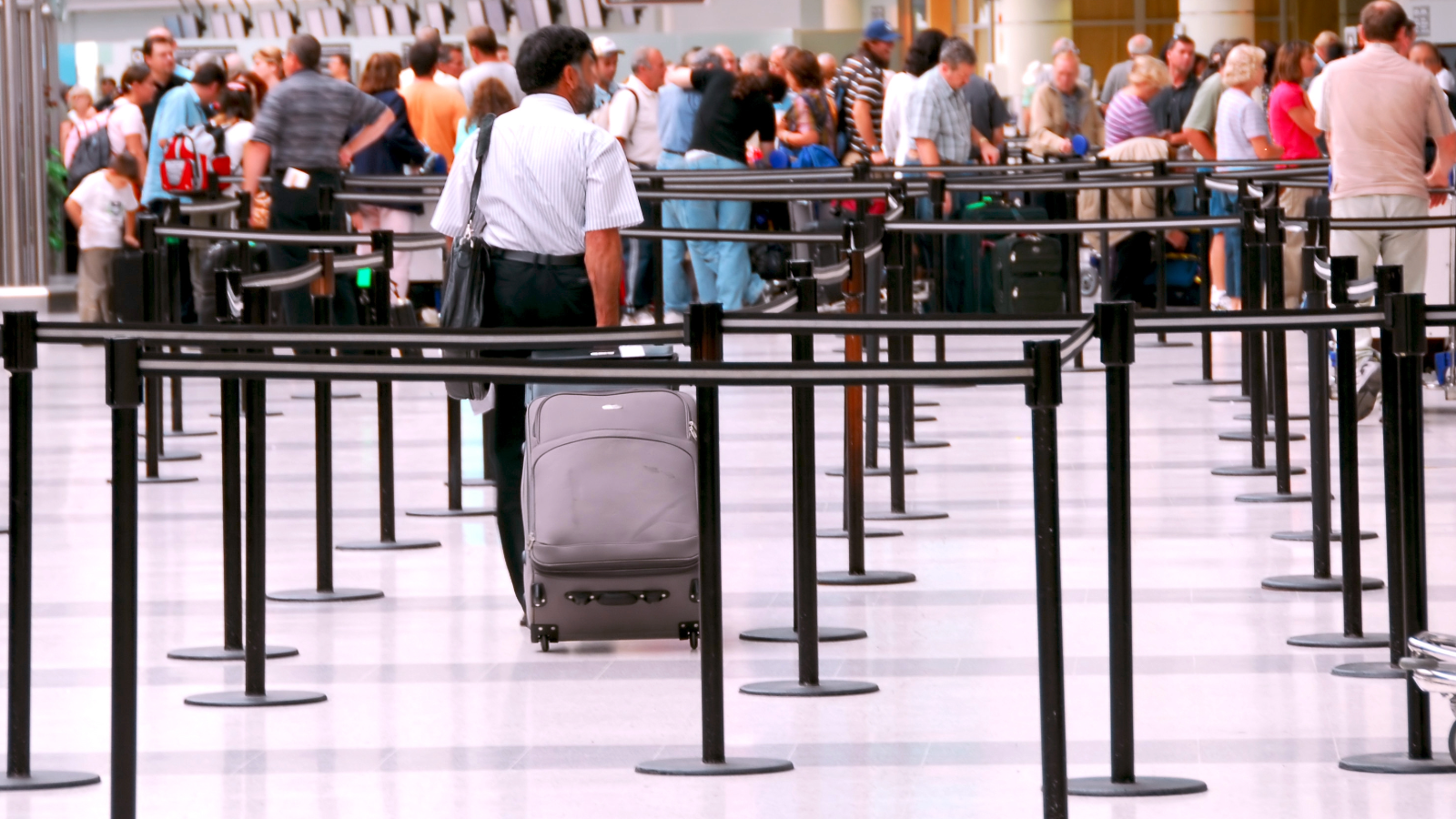
Airports across the country are in disarray. Long lines stretch for hours. Travelers are missing flights. Transportation Security Administration (TSA) officers are calling in sick or leaving altogether, pushed to the brink by staffing shortages and funding uncertainty.
In response, the administration has turned to an extraordinary measure: deploying U.S. Immigration and Customs Enforcement (ICE) agents to airports to “assist” with security operations. On paper, the role is limited: crowd control, logistical support, filling gaps. In practice, it represents something far more consequential. This is not just a response to long airport lines; it is about the steady expansion of an enforcement agency into spaces where it does not belong.
ICE Is Not Trained for Aviation Security
Let’s start with the obvious: TSA officers are trained in aviation security. Detecting explosives, identifying evolving threats, and managing screening protocols is specialized, technical work requiring months of training and continuous certification. ICE agents are not trained for this role. Even federal employee unions have warned that placing untrained personnel into security environments does not solve the problem and potentially creates new risks. Indeed, Congress created distinct roles for aviation security and immigration enforcement; collapsing those roles, even temporarily, is not just impractical but raises serious legal and constitutional concerns. Airport security is not interchangeable with general law enforcement or immigration enforcement. The stakes are too high for improvisation.
Blurring the Line Between Security and Immigration Enforcement
Airports are among the most sensitive public spaces in the country. They are spaces where millions of people, including citizens, noncitizens, and mixed-status families, must pass through. Embedding immigration agents into routine security functions blurs a critical line: Where does airport security end and immigration enforcement begin? What specific statutory authority is being exercised, and by whom? What protections apply at that moment?
This ambiguity is not theoretical, nor is it unprecedented. It is, time and again, how rights erode, not all at once, but gradually, through confusion and lack of clarity rather than explicit policy.
We have seen this pattern before. ICE was not intended to be omnipresent in daily civic life. Yet its footprint has expanded from courthouses to neighborhoods, workplaces, and even parking lots, shifting from targeted enforcement to visible, normalized presence.
Deploying ICE to airports, one of the most public, high-traffic civilian spaces in the country, accelerates that normalization. Today, it is “just helping TSA.” Tomorrow, it becomes routine. And once something becomes routine it becomes harder to question, and harder still to challenge.
A Troubling Track Record
This expansion might be less alarming if ICE had a better record of restraint and respecting rights. But recent events tell a different story. Reports from Minneapolis to Boston to Los Angeles and throughout the country have centered on unlawful or questionable arrests, racial profiling, warrantless entries into homes and businesses, and disproportionate use of force including the shooting deaths of lawful protesters.
Against that backdrop, placing ICE in everyday public-facing roles, especially in spaces involving vulnerable populations, is not reassuring. It is unsettling.
Supporters of this deployment may argue that ICE is not conducting enforcement at airports and is merely helping the traveling public get through security lines faster. That may be the official line. But perception matters. For many immigrants, and for many U.S. citizens, seeing ICE agents in security roles creates hesitation and fear: Will I be questioned? Will my family member be stopped? Will my devices be seized? Is this still just a security checkpoint? Public safety depends on trust. When people feel uncertain or intimidated, that trust erodes.
We Should Resist ICE Expansion—Even If It’s Inconvenient
Let’s be clear: the current situation is unacceptable. TSA officers should not be working without pay. Airports should not be in chaos. Travelers should not be stuck in hours-long lines. But the solution to a funding crisis is not to repurpose an immigration enforcement agency into a stopgap security agency. That is not a fix, it is merely a workaround that trades fundamental principles for short-term convenience.
There is a temptation, especially when standing in a three-hour security line, to accept anything that makes it move faster. But some lines should not be crossed. Allowing ICE to expand into airport security weakens clear boundaries between agencies; it normalizes enforcement in civilian spaces; it risks civil liberties; it deepens fear in immigrant communities. These are not small costs. They are structural ones. And once paid, they are rarely refunded.
We all want shorter lines. We all want functioning airports. But we should also demand a system where roles are clear, rights are protected, and enforcement power has limits. A delayed flight is frustrating. An unchecked expansion of federal enforcement authority is something else entirely. And that is not a trade worth making.
