Pro Bono High Five: Johnny Sinodis
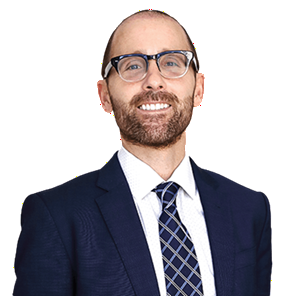
Johnny Sinodis, San Francisco, CA
Johnny Sinodis is a partner at Van Der Hout LLP who joined the firm in August 2019. His practice focuses on removal defense, appeals, the immigration consequences of criminal convictions, and federal court litigation. Johnny is currently co-counsel in Rosario v. USCIS, a nationwide class action requiring USCIS to adjudicate asylum applicants’ initial (first time) applications for employment authorization documents within 30 days pursuant to 8 C.F.R. § 208.7(a)(1) (2018), and Aleman Gonzalez v. Sessions, a class action mandating prolonged detention bond hearings for individuals within the Ninth Circuit who are detained under 8 U.S.C. § 1231(a)(6). Johnny advises criminal defense attorneys and public defenders on the immigration consequences of criminal convictions and provides mentorship and training for practitioners and pro bono attorneys. He has also presented Continuing Legal Education seminars on various topics, including habeas petitions in federal court, post-conviction relief, and the representation of undocumented workers charged with Identity Theft and other fraud-related offenses.
Johnny received his J.D. from the Sandra Day O’Connor College of Law in 2011. As a law student, he participated in the Immigration Law and Policy Clinic, advocating for unaccompanied minors seeking Special Immigrant Juvenile Status. He externed at the Executive Office for Immigration Review’s Phoenix Immigration Court and authored articles for the Law Journal for Social Justice and the Sports and Entertainment Law Journal, where he also served as an Editor.
How did you get started with pro bono work?
I began my career at a firm in Phoenix, Arizona that was committed to defending immigrant workers—overwhelmingly Latino—who were targeted by racist policing practices in Maricopa County. At the time, Joe Arpaio ran the Sheriff’s Office and used state criminal laws as a weapon to carry out federal immigration enforcement, effectively criminalizing brownness and poverty. The people swept up in this system were almost always working-class immigrants who lacked the resources to hire private counsel, particularly when they were the primary source of income for their families. The Maricopa County Public Defender’s Office was completely overwhelmed and often lacked the immigration expertise needed to secure outcomes that wouldn’t trigger detention or deportation. We began taking on worksite raid cases pro bono and organized trainings for public defenders to help them understand how to litigate aggressively or negotiate pleas that would avoid immigration-safe resolutions.
Why do you do pro bono? What do you personally get out of doing pro bono work?
I became an immigration attorney to help one of the most vulnerable segments of our community. Those who cannot afford representation are effectively denied access to justice altogether—especially in removal proceedings, where there is no right to appointed counsel. Without representation, people are separated from their families, deported to dangerous conditions, or permanently barred from stability and safety. Taking on a pro bono case can alter the trajectory of someone’s life—allowing them to remain with their family, obtain lawful status, or simply live without constant fear.
What has been your most rewarding experience and your most challenging experience doing this work?
That’s a difficult question to answer. The rewards and challenges are often intertwined—moments of joy and relief when someone is able to stay, set against the constant reality of a system that is designed to exclude, punish, and dehumanize. The relationships we build with our clients often turn into friendships, making the outcome of their case deeply personal. As of today, the case that feels most rewarding involves a couple from Arizona who I first met nearly fifteen years ago. Their case was very involved, with their removal proceedings and district court litigation reaching the Ninth Circuit at different stages. Both were eventually able to obtain their lawful permanent residency last summer and along with that came the stability that they and their children have deserved for so long.
What is a pro bono project you are currently working on that you are most passionate about?
I am currently part of a team of attorneys representing Mahmoud Khalil. His case raises questions about the limits of executive power and the use of immigration law as a tool of political repression. At stake is whether the government can deport a noncitizen for engaging in constitutionally protected speech.
This case goes to the heart of authoritarian overreach and the criminalization of dissent. If the government is allowed to use immigration status as a weapon to silence political expression, the implications will extend far beyond the immigrant community. I am incredibly grateful to be working alongside a group of brilliant attorneys—both within Van Der Hout LLP and a few of our partner organizations—who are committed to ensuring that repression and tyranny are not normalized or allowed to stand.
Do you have advice for other attorneys interested in taking on pro bono matters?
Do it! There are so many people who deserve quality representation and not enough attorneys who provide free services. Especially right now, when the administration has targeted Legal Orientation Programs for termination, it’s imperative that attorneys working at private firms step up to fill the gap.