Think Immigration: More Than Forms and Filings—How Kenya Reminded Me That Immigration Begins with Hope
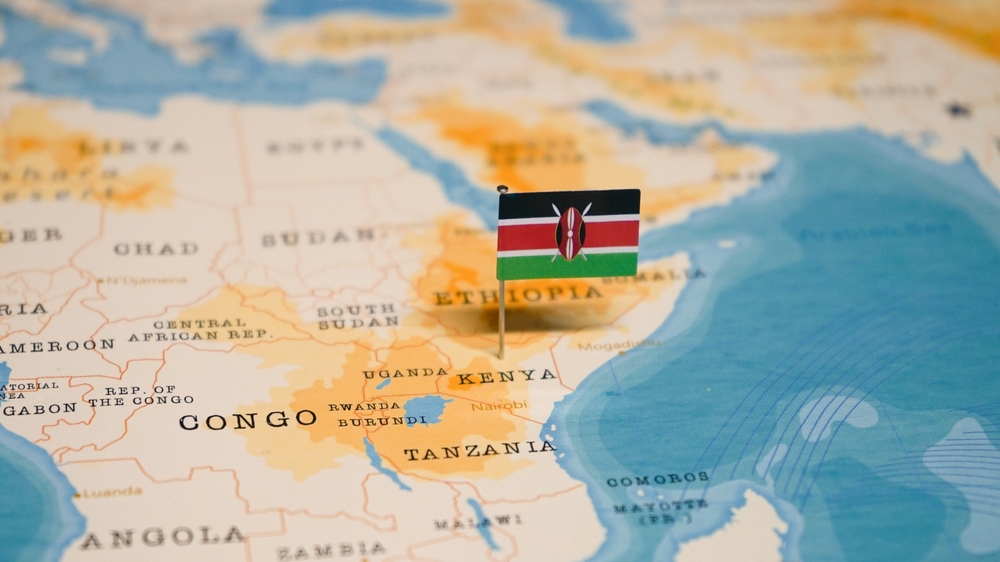
Like many immigration lawyers, I spend most of my days focused on deadlines, filing requirements, visa availability, processing times, and government decisions. We become experts in forms, procedures, regulations, and strategy. We learn how to navigate a system that is often complicated, frustrating, and deeply consequential for the people who depend on it.
But every once in a while, something reminds you why you started doing this work in the first place.
Seeing Immigration Through a Different Lens
Recently I had the opportunity to travel to Kenya as part of a humanitarian trip with the Human Development Fund (HDF)'s HDF Witness program. During the trip, we visited villages, orphanages, schools, program serving children with special needs, medical clinics, and families throughout the region. HDF's work in Kenya includes initiatives focused on healthcare, food assistance, education, clean water, and support for vulnerable communities.
I expected to witness poverty. I expected to see humanitarian work. What I didn't expect was to return home thinking differently about immigration. Not because anyone was talking about immigration. In fact, nobody was. But because everywhere I went, I met people whose hopes looked remarkably similar to those of my clients.
We visited families living in one-room homes, sometimes with eight, ten, or even twelve people sharing a space that many Americans would consider impossibly small. We sat with parents who worried about providing food, education, healthcare, and opportunities for their children. We met people facing challenges that would overwhelm most of us, yet they welcomed us into their homes with warmth, generosity, and dignity.
One of the lessons I learned very quickly in Kenya is that hospitality has very little to do with wealth. Some of the most generous people I met were people who had almost nothing to spare. They still wanted to share what they had. They still wanted us to feel welcome. They still expressed gratitude despite living in circumstances that would be extraordinarily difficult for most Americans.
As I sat with these families, I found myself thinking about my clients. In immigration law, we often talk about economic opportunity, family reunification, education, security, and quality of life. Those concepts can sometimes feel abstract when discussed in policy papers, court decisions, or legal arguments. They felt anything but abstract in Kenya.
When you sit with parents who are doing everything they can to create a better future for their children, you begin to understand that the motivations driving immigration are not political concepts. They are human ones.
Throughout my career, I have represented families from every corner of the world. Their stories are different, but the underlying motivations are often remarkably similar. Parents want opportunities for their children. Students want access to education. Professionals want the ability to use their skills and build stable careers. Families want to remain together. People want safety, security, and the chance to build something better than what they have today.
Those same hopes were present in every community we visited.
What Wajir Taught Me About Stability
One of the most eye-opening parts of the trip was traveling to Wajir, where drought and limited access to basic resources continue to affect daily life for many families. HDF's work in the region includes food assistance and efforts to improve access to clean water for vulnerable communities.
We participated in food distribution efforts and saw firsthand what that assistance meant to people who genuinely did not know where their next meal would come from. It's one thing to read statistics about food insecurity. It's another thing entirely to hand food directly to families and watch the relief on their faces. The gratitude expressed for something as basic as being able to feed their children was humbling.
Just as impactful was seeing the ongoing need for clean water. Before this trip, I understood the concept intellectually. In Wajir, I saw the reality behind it. Water isn't simply a convenience. It impacts health, education, economic opportunity, and daily survival. Communities throughout the region continue to struggle with access to safe drinking water, making water initiatives among the most critical humanitarian efforts being undertaken there.
Standing there, helping distribute food and learning about water access challenges, I found myself once again thinking about immigration. As lawyers, we often become focused on visa classifications, statutes, regulations, and agency adjudications. Yet immigration frequently begins with something far more basic. People want stability. They want opportunities. They want to provide for their families. They want their children to have a future that is better than the one currently available to them.
The experience reminded me that where a person is born can profoundly impact the opportunities available to them, but it does not change their aspirations. The families we met in Wajir wanted the same things my clients want every day: safety, stability, education, opportunity, and a chance to build a better future for the next generation.
One of the most memorable days of the trip was the time we spent at an orphanage. Our group prepared and served hamburgers to the children. Before that day, many of them had never had a hamburger before. We also distributed toys and spent hours simply playing, talking, and spending time with the children.
The Importance of Showing Up
What struck me most was not the food itself. It was the excitement. Something most Americans would consider ordinary had become a special event. The children were excited not because of what they were receiving, but because someone had shown up for them.
That perspective stayed with me.
In immigration law, we often become consumed by the complexity of cases. We focus on legal standards, documentary evidence, and government adjudications. Yet behind every petition is a person who simply wants a chance. Sometimes the most meaningful thing we do as attorneys is show up, listen, and help carry a burden that someone has been carrying alone.
Another powerful experience was visiting a program serving children with special needs. We met children receiving care, therapy, education, and support through programs designed to help them thrive. We met parents and caregivers who had devoted their lives to ensuring these children received the opportunities and support they deserved. HDF supports programs providing education, therapy, and assistance to children with disabilities who might otherwise have limited access to those services.
As I spent time there, I found myself returning once again to a familiar realization: no matter where you are in the world, parents want the same things for their children.
The circumstances may be different. The resources may be different. The opportunities may be different. But the hopes are often exactly the same. Every parent wants their child to thrive. Every parent worries about the future. Every parent hopes their child will have opportunities they themselves never had. That realization stayed with me throughout the trip.
Life-Changing Outcomes
Another experience that has remained with me was visiting HDF's cataract surgery program. Through these efforts, individuals suffering from preventable blindness or severe vision impairment receive treatment that can dramatically change their quality of life.
As lawyers, we are trained to focus on outcomes. We spend our careers waiting for decisions. Approved. Denied. Granted. Rejected.
Standing in that clinic, I watched a different kind of life-changing outcome unfold before me. I watched family members waiting anxiously. I watched patients emerge from treatment with hope and gratitude. I watched people regain something many of us take for granted every day: the ability to see the world around them.
The emotion in those moments was overwhelming. There were tears, hugs, smiles, and gratitude that transcended language. And once again, I thought about immigration.
No, immigration benefits do not restore eyesight. But every immigration lawyer has witnessed moments where a government decision fundamentally changes the trajectory of someone's life. We have all made calls informing clients that their green card has been approved, that their family member's visa has been issued, that they can finally work legally, that they can finally travel, or that they can finally become United States citizens.
Those moments are why many of us do this work. They remind us that our case files represent real people, real families, and real futures.
Throughout the trip, I kept returning to one thought: most people do not want to leave home. Home is where your family is. Home is where your memories are. Home is where your language, traditions, community, and identity are rooted. Yet every day, immigration lawyers work with people who have made incredibly difficult decisions to leave home in pursuit of something they believe will create a better future.
Standing in Kenya, meeting families striving to improve their lives despite extraordinary obstacles, I was reminded that immigration is fundamentally about hope. Hope for opportunity. Hope for education. Hope for economic stability. Hope for safety. Hope for family. Those motivations transcend borders, cultures, religions, and nationalities. They are simply human, and immigration is ultimately a story about human potential.
Whether I was sitting with families in Wajir, helping distribute food, learning about clean water initiatives, watching children at orphanages play with new toys, spending time with children with special needs, witnessing patients regain their eyesight through cataract surgery, or listening to parents talk about their hopes for the future, the common thread was impossible to miss.
People want opportunities. People want dignity. People want the ability to care for the people they love. Those same aspirations walk into our offices every day.
They arrive in the form of an H-1B petition, an I-130, an N-400, an asylum application, an EB-1 petition, an immigrant visa application, or a PERM labor certification. We call them cases because that is how our system is structured. But they are really stories. Stories of sacrifice, perseverance, resilience, and hope.
Returning to the Work With New Perspective
When I returned to my office, my inbox was still full. The deadlines were still waiting. The RFEs still needed responses. The PERM applications still needed review. Nothing about the practice of immigration law had changed. But I found myself looking at my cases a little differently. The employment-based petition on my desk was not simply a labor certification. It was a family hoping for stability. The family-based petition was not simply an I-130. It was people trying to reunite their lives. The naturalization application was not simply another N-400. It was the culmination of someone's immigration journey and years of sacrifice.
Kenya reminded me that behind every form we file is a person carrying hopes, fears, responsibilities, and dreams that will never fully fit into a government application.
As immigration lawyers, we have the privilege of stepping into those stories every day. Sometimes, however, it takes traveling thousands of miles away to be reminded why those stories matter.
Kenya reminded me that immigration is not merely about crossing borders. It is about human beings trying to create better lives. And when viewed through that lens, the work we do as immigration lawyers becomes about much more than forms and filings.
It becomes about helping people access possibilities that may otherwise remain out of reach. And for that lesson, I will always be grateful to Kenya.
About the Author:
