Think Immigration: Immigration, Belonging, and the Work of a More Perfect Union—A Neighborhood Tradition, A National Question
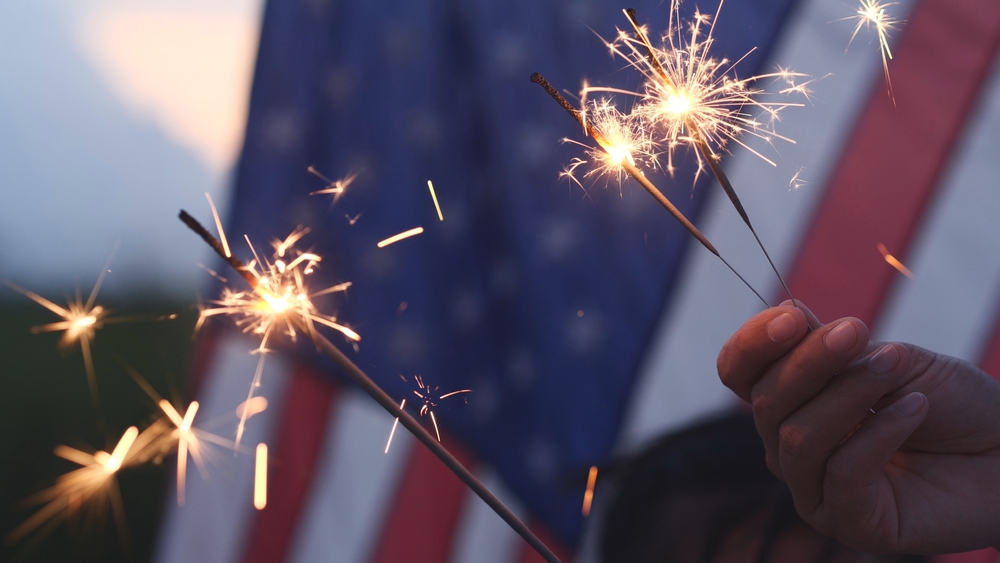
“I want to hold a bunny,” my four-year-old declared as I helped her find her shoes. “My friends are already there—can I go?” asked my preteen, one foot out the door. We were headed to our neighborhood’s annual Fourth of July parade, the longest-running neighborhood Independence Day parade in Austin. By 8:00 am, neighbors were gathering for coffee, donuts, breakfast tacos, a mini-petting zoo, and visiting fire trucks.
Our East Austin neighborhood was built for returning World War II veterans, many of whom were starting families. My grandparents moved here in 1948 after my grandfather came home from service in the Pacific. My mom grew up here, I grew up here, and now I am raising my children here. Celebrating the 250th anniversary of U.S. independence with my neighbors, I could see the country’s story in one small gathering: continuity, change, differences, belonging, and the ongoing work of building community.
My family’s story is also tied to movement across borders. My brother and I both married immigrants, and my father’s family immigrated to Chile in the 1950s before returning to the United States after the coup. So, when I think about belonging, community, and country, I think not only about the place where my family put down roots, but also about the people and histories that cross borders and reshape what “home” means.
That mix of rootedness, movement, and change was all around us that morning. While our son compared decorated bikes with friends and our daughter held a bunny, my husband and I greeted longtime neighbors and newcomers. Our city council member spoke about the city’s past and future. A former neighbor invited the crowd, as he does every year, to reflect on U.S. independence, “a more perfect union,” and civic engagement. Then we sang the national anthem and began the parade. As we walked, a newer neighbor said to me, “It’s so nice to be at a Fourth of July celebration that’s patriotic without being divisive.”
Finding Common Ground on Immigration
My neighbor had named something many of us are hungry for: a way to celebrate our country’s past, present, and future without pretending the challenges we face are simple, and a way to talk across differences without reducing neighbors to opposing camps.
As we looped through the neighborhood, I kept thinking about that comment. Too often, public discourse is framed as a choice between competing sides. Immigration is one of the clearest examples. Whether we are talking about past immigration, current policies, or the future we want to build, it is easy to focus on disagreement. But building a democracy “of the people, by the people, and for the people,” as President Lincoln described it, has always required finding common purpose amid differences.
People will disagree about the ideal future of immigration in the United States. Those differences even exist within AILA, despite our common mission. But most of us can agree on a starting point: the immigration system should be fair and functional, help build safe and prosperous communities, and inspire public trust.
A Better Way Rooted in Shared Values
That is the premise behind AILA’s A Better Way on Immigration: Principles for America’s Future. The framework does not ask us to agree on everything. It asks us to begin with shared values and use them to build an immigration system that earns trust, respects human dignity, strengthens communities, and reflects our national ideals. The Principles call for improved border processing, solutions for longtime residents, an immigration system aligned with community and economic needs, and solidarity with people seeking safety and freedom.
What Shared Purpose Looks Like
After the parade—a loop led by fire trucks, with neighbors following on foot, bikes, skateboards, and scooters—we gathered for the annual potluck. We shared Texas barbecue, homemade sides, and red-white-and-blue desserts while neighbors played live music. As the evening arrived, along with the mosquitoes, people stayed to help clean the host’s home and yard.
Our neighborhood includes people of different ages, backgrounds, languages, politics, religions, professions, family structures, and lengths of time on the block. It would not be hard to list our differences. But every Fourth of July, we show up to foster a community where people pitch in, make room, and choose connection over division.
Two hundred and fifty years after the Declaration of Independence, the work of building a more perfect union continues. It does not require perfect agreement. It requires shared values, the courage to protect them, and the humility to remember that we are stronger when we build the future together.
About the Author:
