Think Immigration: Venezuelans in the U.S. Must Be Protected from Deportation
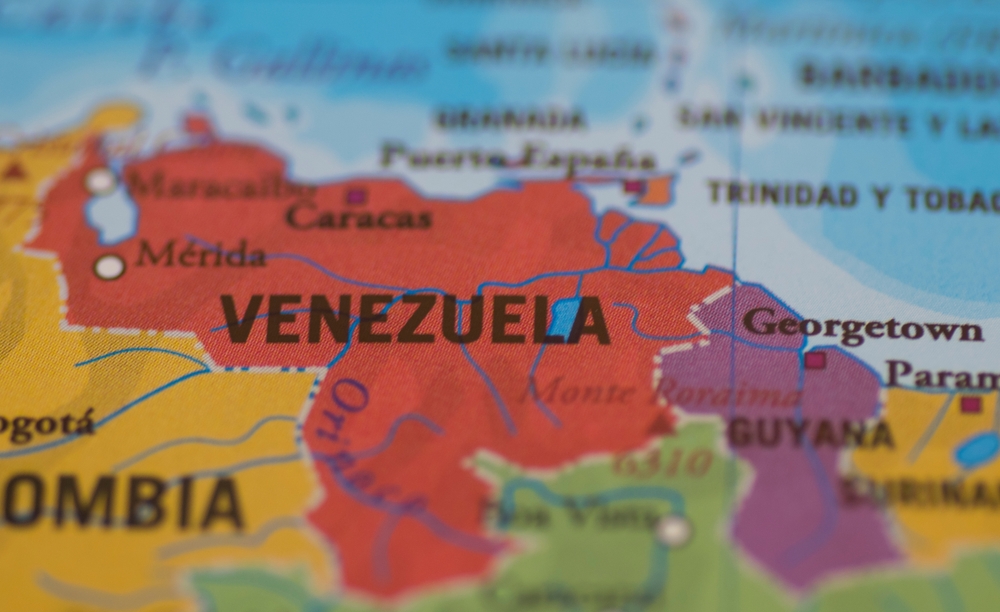
On June 24, 2026, 7.2 and 7.5 magnitude earthquakes struck northwestern Venezuela in rapid succession, collapsing buildings across Caracas and La Guaira state. More than two weeks later, the confirmed death toll has surpassed 3,500, with thousands more injured and thousands still missing. The U.S. Geological Survey estimates that the final death toll could reach 100,000. AILA organizationally sent a letter to DHS recommending specific actions be taken; this blog post lays out why those protections are so urgently needed.
These earthquakes aggravated the political and humanitarian crises already affecting Venezuela. According to the United Nations High Commissioner for Refugees (UNHCR) over 7.9 million people have left Venezuela to search of protection and a better life creating the largest humanitarian crisis and migration in the history of the western hemisphere. Venezuela has endured more than a decade of economic collapse and authoritarian rule under the Chavez and Maduro regimes. There is no credible argument that the United States can safely deport people to Venezuela. The Department of Homeland Security should immediately designate Venezuela for Temporary Protected Status (TPS), particularly when U.S. actions have contributed to the country's present instability.
This would not be unprecedented, and it would be consistent with decades of U.S. humanitarian practice. When major natural disasters have devastated other countries, the United States has not treated immigration policy as business as usual. Instead, it has used the tools available to prevent people from being returned to dangerous conditions while affected countries recover. TPS is the best-known of those tools, but it is far from the only one. Administrations of both parties have temporarily paused removals, including extending Deferred Enforced Departure (DED), granted Special Student Relief so international students could remain in lawful status while working additional hours, and adopted practical visa-processing flexibilities when disasters made normal immigration procedures impossible. These measures reflect a simple principle that immigration policy should respond to humanitarian reality.
TPS, of course, has historically been central to that response. Three days after the January 2010 earthquake killed an estimated 300,000 people in Haiti, DHS Secretary Janet Napolitano designated Haiti for Temporary Protected Status, citing the "extraordinary and temporary conditions" that made return unsafe. Haiti's designation was repeatedly extended and redesignated as cholera outbreaks, hurricanes, and political instability compounded the disaster. The government also temporarily halted removals to Haiti and implemented other forms of immigration relief while the country struggled to recover. Likewise, El Salvador received TPS after devastating earthquakes in 2001 and remained protected for years as it rebuilt. Across administrations and across disasters, the underlying logic has remained the same: the United States should not force people to return to countries reeling from catastrophic natural disasters.
That same logic should apply to Venezuela today. Yet despite the obvious parallels, the current administration has refused to use any of the humanitarian tools at its disposal. At a moment when thousands remain unaccounted for, infrastructure has been devastated, and the country's already fragile institutions have been pushed closer to collapse, withholding TPS and declining to implement even more modest forms of temporary immigration relief is not simply a policy choice, it is a decision to expose people to extraordinary danger.
The administration's broader hostility toward TPS makes that refusal unsurprising. Since returning to office, President Trump has sought to dismantle protections for multiple countries. DHS Secretary Kristi Noem's termination of the 2021 and 2023 Venezuela TPS designations remains the subject of extensive litigation, but as matters currently stand, there are few Venezuelan TPS holders in lawful status and who risk deportation to an active humanitarian crisis.
The legal path to challenge that inaction has also narrowed. In Mullin v. Doe, the Supreme Court held that TPS terminations are not subject to judicial review. But, of course, the DHS Secretary retains independent statutory authority to designate Venezuela for TPS based on the earthquakes and the extraordinary conditions that exist in the country. DHS should also immediately implement a temporary moratorium on removals and extend other forms of protections to Venezuelans in the United States or seeking to immigrate.
If DHS refuses to exercise that authority, Congress should step in. Earlier this year, Congress forced a floor vote extending Haiti's TPS designation, which passed with bipartisan support by a vote of 224–204. Lawmakers who recognized that people should not be deported into Haiti's ongoing humanitarian crisis should again act to help Venezuelans in the wake of this crisis.
The United States simply should not deport people to a country devastated by earthquakes, where thousands have died, infrastructure further collapsed, and the government's capacity to respond is limited. DHS should take all immediately steps to protect Venezuelans. If the administration refuses, Congress should compel action, and advocates, lawyers, and members of the public should demand that their elected officials treat this disaster and the aggravating humanitarian crisis in Venezuela with the urgency and humanity it requires.
About the Author: