Think Immigration: Immigration Benefits Screening - Keeping your Head on a Swivel

This blog post is part of a multi-part series from members of the AILA Rule of Law (AROL) Task Force; for more information about AROL look to Chair Jerry Grzeca’s blog post which is a handy guide to its purpose, priorities, and work.
Even after practicing immigration law and being a member of AILA now over forty years, each day seems like a new world of potential considerations to answer those calls regarding “simple” questions as to immigration solutions and options. Immigration is a political subject that is buffeted by the winds of public opinion.
Those winds are causing a tsunami of policy, practice, and regulatory changes from this administration. This ongoing storm requires me to keep my head on a swivel to try to spot and assess issues and solutions on the fly throughout the day more than ever in my career. As evidence of this flood of challenges, the Immigration Policy Tracking Project currently has a record tally totaling 699 changes under the Second Trump Administration.
All of these changes may then be vacated or modified as to impact due to resulting litigation in this already complex legal area. Many a federal court decision in the area of immigration law confirms the challenges of its unique complexity:
"… “[t]he proliferation of immigration laws and regulations has aptly been called a labyrinth that only a lawyer could navigate.” Romero v. Bondi, 150 F.4th 332, 340 (4th Cir. 2025) (alteration in original) (quoting Nehad v. Mukasey, 535 F.3d 962, 967 (9th Cir. 2008))." - Nogales v. Dir. of United States Citizenship & Immigration Servs., 1:25CV503 (M.D. N.C. May 08, 2026.
Assessing Options and What is so Complicated?
One of the many reasons for this complexity reputation is that the assessment of an immigration case within the scope of a legal engagement includes relevant laws, regulations, and policies that may touch a whole host of agencies with dissimilar interpretations in addition to being subject to many rapid changes.
For example, even the most basic employment-based case may include considerations of the following agencies: U.S. Department of Labor (DOL), U.S. Department of State (DOS), U.S. Department of Justice (DOJ) U.S. Customs and Border Protection (CBP), U.S. Citizenship and Immigration Services (USCIS), and U.S. Immigration and Customs Enforcement (ICE). In addition, decisions made in an immigration context may impact Social Security Administration and U.S. Internal Revenue Service consequences. Then there is the whole state and local law lens that must also be used to spot additional compliance and planning problems.
You also must add the ongoing fluidity of legal interpretations and policies of the various agencies, which often make substantive changes without regulatory notice and comment review. Of course, immigration case facts also can change frequently due to marital status, other family relationships, corporate structures, wages, employment terms or locations, international travel demands, remote work, etc. Finding out about material changes after the fact is always a major headache for legal counsel.
Your Law License is on the Line
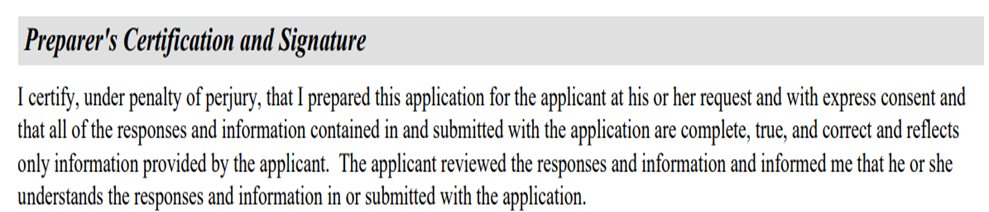
When filing an Application for Naturalization (N-400), for example, the form requires the signature of the attorney of record representing that the responses and information contained and submitted with the application are “complete, true, and correct and reflects only information provided by the applicant.”
For that matter, in the I-129 petition, the petitioner’s signator authorizes USCIS to “conduct audits of this petition using publicly available open-source information” as well as to “recognize that any supporting evidence submitted in support of this petition may be verified by USCIS through any means determined appropriate by USCIS, including not limited to, on-site compliance review.” Obviously, as legal counsel we are advising the petitioner of this level of oversight allowed and compliance necessary.
When making a judgment call on eligibility of a petitioner, beneficiary, or applicant for the immigration benefit being requested, attorneys face the challenge of looking into the past, present, and future. A material error in responding to questions on a form can expose the beneficiary and legal counsel to potential allegations of fraud. Approved cases can later be subject to revocation in some situations due to changed circumstances or a material fact that was not disclosed for some reason at the time of filing or overlooked. In addition, many benefit filings require the application of discretion on the part of legal counsel to determine if an amendment is necessary prior to a nonimmigrant beneficiary engaging in new duties, for example, under their existing nonimmigrant category authorizing work. For that matter, the various agencies involved do not necessarily agree or provide consistent guidance.
Consideration for Intake and Case Evaluations
Immigration attorneys conduct a thorough historical review of clients’ case facts in addition to checking relevant social media and internet postings as merited. It is not uncommon for data not to be updated by a petitioner, applicant, and/or beneficiary, which can lead to misunderstandings and concerns. For that matter, we have added warnings in our case management systems at multiple levels regarding the importance of data accuracy and disclosures of any law enforcement encounter to reduce unwanted surprises to enable us to determine legal options.
The key takeway for legal counsel is that the job of determining benefit eligibility for filings with immigration government agencies is more challenging than ever. In this current constantly-changing and increasingly chaotic era, counsel must keep their head on a swivel as they advocate for their clients.
About the Author:
