Think Immigration: Settled, Again—Takeaways from the Trump v. Barbara Decision
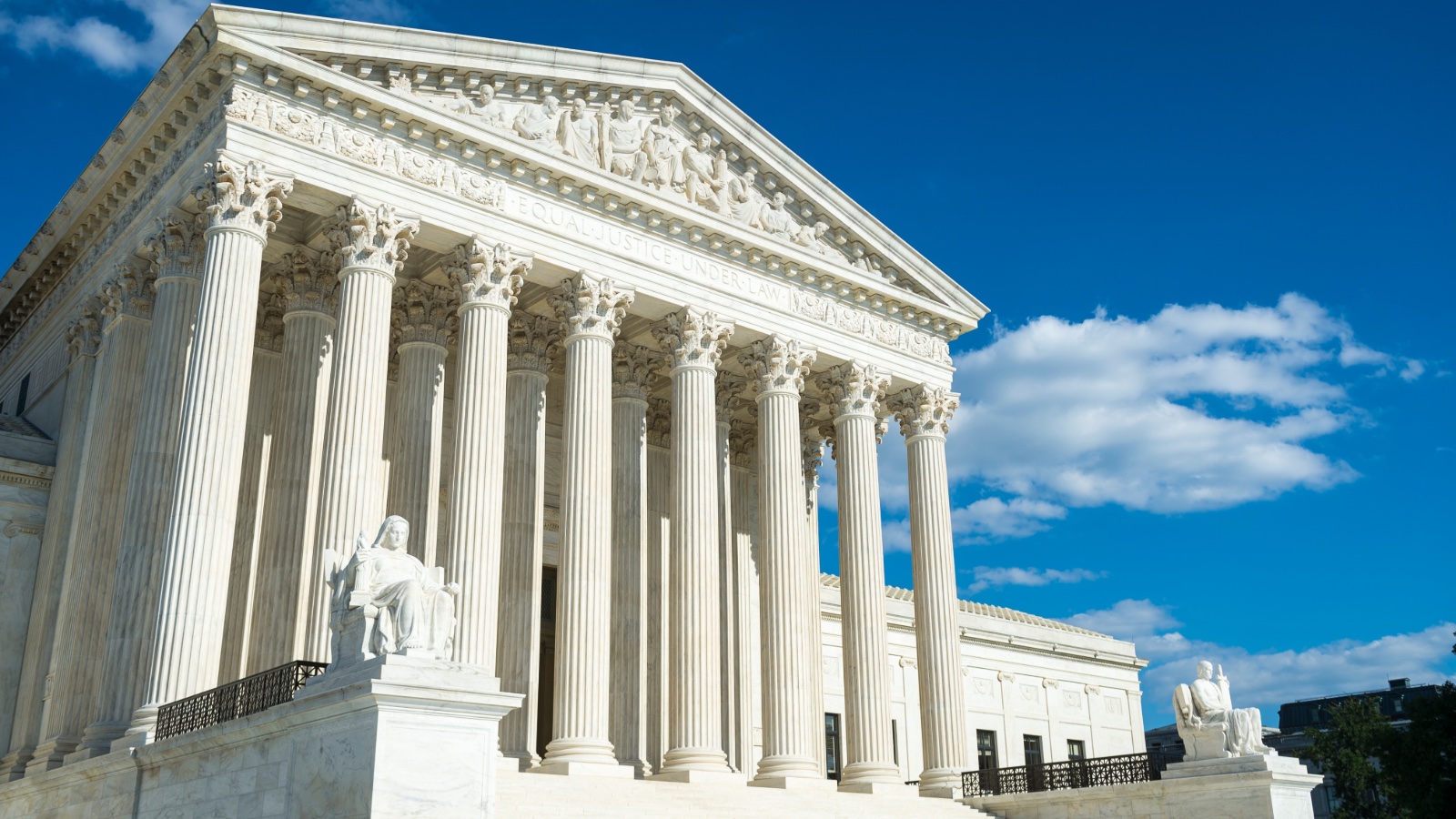
The decision in Trump v. Barbara came down today. The commentary is going to sort itself into two piles. The first: Trump lost. The second: maybe this Court is not as partisan as we feared. Both will miss what actually happened.
Start with the partisanship, because the reassurance pieces have it backward. The Court schedules its most contentious work for the end of the term, and this term ran true to form. Of the last twenty decisions, half split 6-3 along the familiar ideological lines. In that same closing stretch, this Republican supermajority SCOTUS did what it now does every term: it overruled a landmark. Last year it was Chevron, undone in Loper Bright Enterprises v. Raimondo. This year, one day before Barbara, it was Humphrey’s Executor, undone in Trump v. Slaughter, which gave the President power to fire the heads of independent agencies that ninety years of precedent had shielded from presidential removal. This Court has not rediscovered restraint.
Then there is the case itself. Barbara should never have reached the Supreme Court. Executive Order 14160 asked the Court to read a domicile requirement into the Citizenship Clause that no Congress, no President, and no court had found there in more than a century. There was nothing close about the constitutional question. The order was a political demand dressed in legal costume. Granting certiorari before judgment, expediting the briefing, and engaging the merits did not show neutrality. It extended a frivolous theory the dignity of a serious hearing, which was its own quiet concession to the Administration that produced it.
Now what did I get wrong? After the argument, I wrote that the Administration would lose and predicted, in writing, that “the Administration loses this case, and it probably isn’t close.” I was right about the loss. I was wrong about the margin. The overall score was 6-3. But the constitutional holding, the part that decides what the Fourteenth Amendment means, drew only five votes. Chief Justice Roberts wrote for himself, Justices Sotomayor, Kagan, and Jackson, and Justice Barrett. That is a one-vote margin on a question that should have produced none. Move Barrett, and the Citizenship Clause means something different this morning than it did yesterday.
I was also wrong about Justice Gorsuch. At argument he looked like a vote for the challengers. He called the commentators’ treatment of domicile a mess and pressed the Wong Kim Ark dissent in a way that cut against the government. He then joined the dissent. Gorsuch has been relatively good on immigration. On the cases that turn on text and on the individual’s position against the government, he has often been the vote that mattered. Not this term, and not here.
I will take one piece of credit. I wrote that the Court had a statutory off-ramp, because the Citizenship Clause and the Immigration and Nationality Act use identical language and the case could be decided as a matter of statutory interpretation. That is exactly what Justice Kavanaugh did. He concurred in the judgment alone, voting to strike the order under 8 U.S.C. § 1401(a) without reaching the Constitution. His reasoning is simple. Congress enacted the statute’s “subject to the jurisdiction” language in 1940 and again in 1952, after Wong Kim Ark had already construed that exact phrase to contain a closed set of four exceptions. Congress is therefore presumed to have adopted that construction, and the order invents two new exceptions the statute does not permit.
That makes the real division sharper than the overall score suggests. On the Constitution, it was 5-4. Kavanaugh agreed the order is unlawful but refused to hold that the Fourteenth Amendment compels that result, and he left Congress a roadmap: amend § 1401(a), and the statutory problem disappears. But the roadmap is his alone, and it leads nowhere. The five-Justice majority rested on the Constitution, holding that the Fourteenth Amendment itself makes these children citizens. That choice was deliberate. By resolving the case on constitutional ground rather than on the statute, the majority placed birthright citizenship beyond the reach of legislation. Any bill promising to redefine birthright citizenship by ordinary legislation is posturing, because the Constitution now answers the question, and Congress cannot amend the Constitution by statute.
Where the five-Justice majority was unified, it was unified all the way down. United States v. Wong Kim Ark, 169 U.S. 649 (1898), was decided correctly, and the domicile theory has never been the law. The dissents tried to shrink the precedent by noting that the 1898 opinion referred again and again to the domicile of Wong’s parents. The majority did not dispute the references. It disputed that they carried any weight, holding that the reasoning underlying Wong Kim Ark “cannot be squared with a domicile requirement.” The Court had canvassed the text and history of the Clause from the English common law through ratification and found nothing showing the framers of the Fourteenth Amendment believed they were imposing a domicile limitation. That holding is durable precisely because the five who reached it did not hedge.
The dissents are worth reading together, because what divides them says as much as what unites them. Justice Thomas, joined by Justice Gorsuch, wrote the principal dissent and built it on domicile: the Clause guarantees citizenship only to those born and domiciled here, and the children of temporary foreign visitors, attached to and subject to another sovereign, fall outside it. Justice Alito, writing only for himself, reached the same destination by a different road. For Alito the test is allegiance, citizenship for those who at birth owe allegiance solely to the United States. Two of the Court’s most committed textualists, reading the same words, could not agree on why those words exclude the children in front of them. When a dissent cannot settle on a rationale, it is usually because the rationale arrived after the result.
Justice Gorsuch joined Thomas but wrote separately, and his separate opinion is the one that practitioners should not skip. He voted to dissolve the injunction on a procedural ground. Respondents brought a facial challenge, which means an executive order with any lawful application survives the challenge. Per Gorsuch, because the order lawfully reaches the children of genuinely temporary visitors, the facial challenge should have failed. But he did not stop there. Justice Gorsuch openly doubted that the order could constitutionally reach the children of parents who have built a permanent home in this country, even without status. If those parents are not domiciled here, he asked, then where are they domiciled, given that everyone is domiciled somewhere? He all but conceded that the order could not lawfully reach the very families it was written to target.
Look past the dueling rationales to a simpler question: who was actually willing to let the order do what it was written to do? Executive Order 14160 was aimed mainly at the children of undocumented parents who have lived here for years. Six Justices struck it outright, five on the Constitution and Kavanaugh on the statute. Gorsuch, who joined the dissent and voted to dissolve the injunction, still doubted in writing that the order could lawfully reach those families. That leaves Thomas and Alito as the only two prepared to defend the heart of it. On the policy that started this, the split was lopsided, seven to two.
So this is over. Executive Order 14160 is dead. Birthright citizenship is again what it has been since 1898 and what the Fourteenth Amendment has guaranteed since ratification. It will not change unless the Constitution is amended or a future Supreme Court overrules what this one just decided, and neither is on the horizon. A child born on American soil is a citizen. The Court has now said so on constitutional ground, and that holding will outlast this corrupt and xenophobic Administration.
About the Author:
